PRODUCT DESCRIPTION
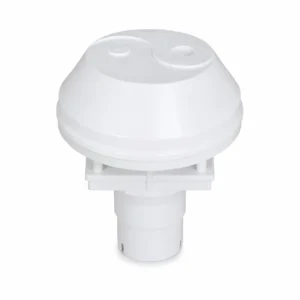
The TH-120-01H4 is an integrated ultrasonic wind speed and direction sensor designed for outdoor wind monitoring and meteorological data collection. It features a non-mechanical structure without external rotating parts. The product has a white cylindrical body, a dome-shaped protective top cover, an open airflow channel in the middle, and a side interface opening on the lower housing. It measures wind speed from 0 to 60 m/s (0.1 m/s resolution) and wind direction from 0 to 359° (1° resolution), with a starting wind speed of 0.5 m/s. Its clean and compact structure makes it suitable for integration with outdoor monitoring equipment.
Compared with traditional cup anemometers or wind vane sensors, this ultrasonic wind sensor reduces the need for external mechanical rotating components, making it suitable for long-term outdoor monitoring projects with lower maintenance requirements. Its ASA housing is rated IP65 and operates from -40 to +70°C and 0–100% RH, with a baud rate of 4800–19200. The TH-120-01H4 can work with data loggers, controllers, weather stations, or integrated environmental monitoring systems to provide data support for wind speed and direction monitoring, meteorological data collection, environmental analysis, and automation control.
SPECIFICATIONS
| Sensor Type | Ultrasonic wind speed and direction |
| Wind Speed Range | 0–60 m/s |
| Wind Speed Resolution | 0.1 m/s |
| Starting Wind Speed | 0.5 m/s |
| Wind Direction Range | 0–359° |
| Wind Direction Resolution | 1° |
| Baud Rate | 4800–19200 |
| Protection Rating | IP65 |
| Material | ASA |
| Operating Temperature | -40 to +70°C |
| Operating Humidity | 0–100% RH |
PRODUCT APPLICATION
The TH-120-01H4 ultrasonic wind speed and direction sensor is widely used in weather stations, environmental monitoring stations, smart agriculture systems, greenhouses, photovoltaic power stations, wind energy projects, roads, bridges, ports, docks, outdoor safety monitoring, and industrial automation monitoring.
It is suitable for outdoor monitoring systems that require both wind speed and wind direction data collection. By helping users understand real-time on-site wind conditions, it provides useful reference data for weather monitoring, agricultural environmental control, equipment operation management, safety warning, and automation systems.