
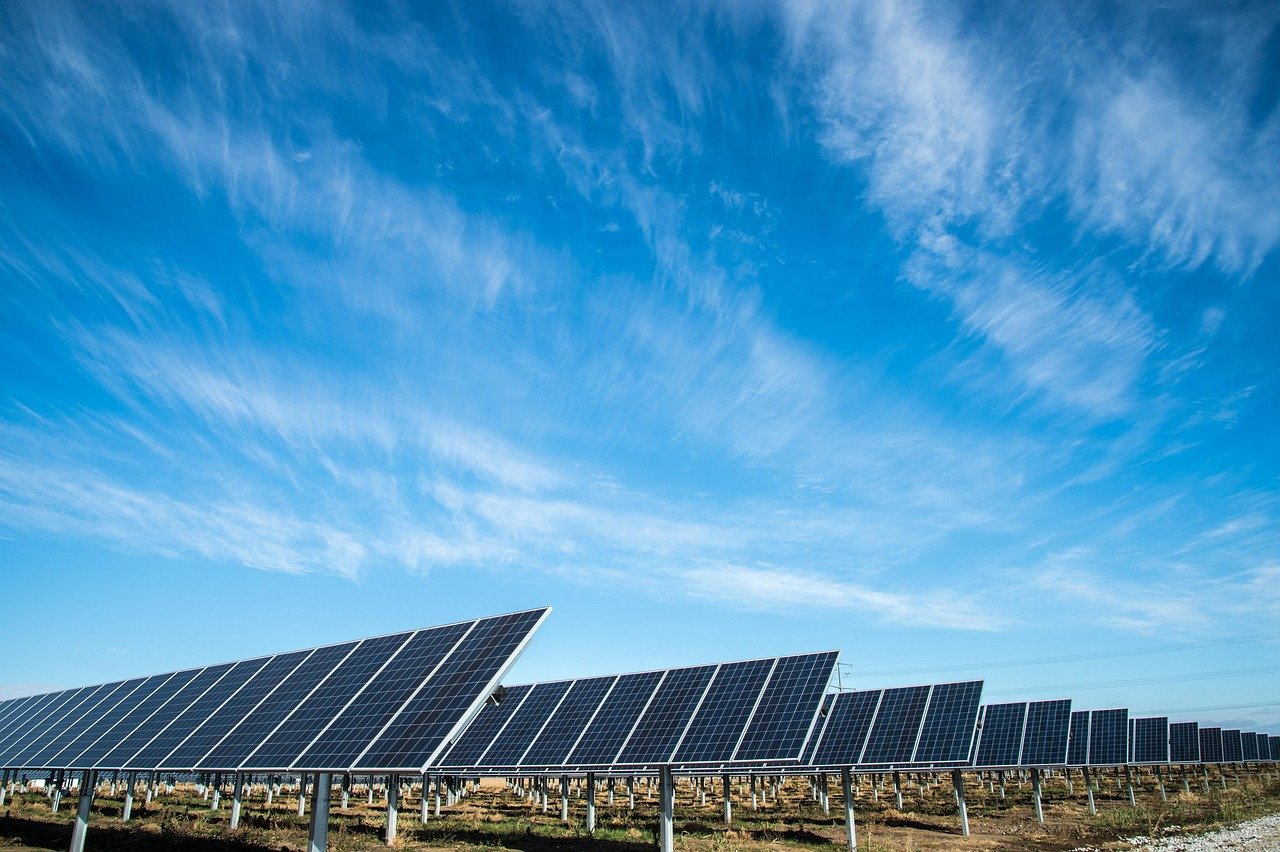
 As global “Carbon Neutrality” goals advance, PV (photovoltaic) solar power plants have evolved from experimental technology into “Sunshine Banks” for factory rooftops, rural courtyards, and remote terrains. Whether it is a small residential system or a large-scale ground-mounted plant, solar energy has become a top choice in the renewable sector due to its self-consumption, excess power monetization, and long-term stability.
Many remain curious: How does solar actually generate power? Is it safe? Is it worth the investment? This guide provides a comprehensive, plain-language breakdown.
I.
Core Principle: Converting Sunlight into Electricity
The logic behind PV power generation can be summarized in one term: the Photovoltaic Effect.
Process: Silicon wafers within solar modules (PV panels) release electrons when exposed to sunlight.
Conversion: These electrons are converted by an inverter from DC (direct current) into AC (alternating current) for use by factories and homes.
Revenue: Any unused electricity can be fed back into the national grid to generate income.
Environmental Impact: The entire process is free of combustion, emissions, noise, and mechanical wear. As long as there is sunlight, it provides a truly green and clean energy source.
II.
What Makes Up a PV Solar System?
A complete solar system consists of four essential core components:
PV Modules: The “heart” of the system, responsible for absorbing sunlight and generating power.
Inverters: The energy hub that converts DC to AC while monitoring system performance.
Mounting Structures & Cabling: These secure the panels, ensure power transmission, and guarantee structural stability.
Grid-Metering Devices: These track power generation and facilitate billing for excess energy fed into the grid.
With no complex moving parts, these systems are easy to install and designed for a service life exceeding 25 years, making them a long-term profitable asset.
III.
Three Core Values of Solar Power Plants
Cost Savings: Significant Reduction in Electricity Bills
Commercial buildings, shopping malls, and farms with high daytime electricity demand can use solar power to match peak usage, drastically cutting energy costs.
Residential users can power home appliances during the day, transforming from “electricity buyers” to “electricity producers”.
Profitability: Net Metering & Subsidies
Excess power can be recovered by the grid, often backed by national buy-back guarantees, providing steady monthly income.
In many regions, policy support turns solar plants into a reliable source of “passive income”.
Sustainability & Asset Appreciation
Every 1MW solar plant reduces CO2 emissions equivalent to planting tens of thousands of trees annually, helping companies meet environmental targets and green certifications.
Rooftop installations also provide heat insulation, cooling the building while extending the roof’s lifespan by reducing direct sun exposure.
IV.
Addressing Top 4 Concerns
Q1: Will rooftop installation cause leaks or structural damage? A: Professional installations use specialized brackets that do not damage the roof structure. When waterproofed correctly, it actually protects the roof. PV modules are lightweight, and standard concrete or metal roofs are more than capable of handling the load.
Q2: Can it generate power on cloudy days or in winter? A: Solar depends on “light,” not “heat”. Power generation continues on cloudy days and during winter, though at a slightly reduced rate. High-altitude and cold regions often see excellent results due to stable sunlight levels.
Q3: Is maintenance difficult or expensive? A: Since there are no mechanical moving parts, maintenance is minimal. It generally only requires periodic cleaning of dust or debris. Annual maintenance costs are extremely low.
Q4: Can all roofs be fitted with solar? A: Most roof types—concrete flat roofs, color steel tiles, and ceramic tiles—are suitable. As long as the roof is structurally sound with clear ownership and minimal shading, it can be utilized for residential or commercial projects.
V.
Conclusion: Turning Your Rooftop into an Asset
Solar energy is a reliable, high-ROI clean energy asset. With a typical payback period of 5-8 years and over 15 years of pure profit following that, it is a proven “wealth-generating” technology backed by grid infrastructure.
By choosing high-quality modules and professional installation, anyone can leverage free sunlight to create a sustainable, income-generating “Solar Gold Mine” on their own roof.